
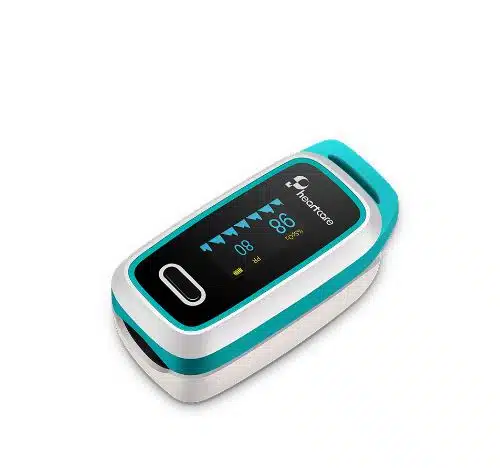
Introduction and general information What Is a Pulse Oximeter?
Proper and unobstructed breathing is one of the most important signs of a person’s overall health, although its importance may not always be immediately apparent. Various congenital diseases, infections, and conditions such as COVID-19 can reduce the amount of oxygen delivered to different parts of the body and make breathing difficult. When such conditions occur, blood oxygen saturation may decrease, and the individual may have difficulty breathing comfortably and voluntarily throughout the day or even while resting.
In such situations, a pulse oximeter can be used to quickly measure blood oxygen saturation so that appropriate measures can be taken if a respiratory problem is detected. Due to its simple operation and ease of use, this device is not limited to hospitals and medical centers. By having a pulse oximeter at home or at work, blood oxygen saturation can be measured within a few seconds.
In general, this device can help reduce the risk of serious and potentially irreversible complications, such as severe respiratory problems. The device works by displaying the individual’s blood oxygen saturation after being placed on the patient’s finger. In this article, we will explain the importance of using a pulse oximeter and how to use it properly.
Blood Oxygen Monitoring Device
The human body generally requires a normal blood oxygen saturation level of approximately 95% to 97% for normal functioning. A large proportion of the oxygen carried to the body’s tissues and organs is transported through its chemical binding to hemoglobin. This level may be lower in people with conditions such as cardiovascular disease, asthma, heart failure, chronic obstructive pulmonary disease (COPD), lung cancer, pneumonia, and anemia. These individuals may experience shortness of breath and a feeling of suffocation under different circumstances, even during normal activities.
Another important sign of reduced blood oxygen levels is a bluish or dark discoloration of the lips, skin, or fingernails. Pulse oximetry is a method used to measure the amount of hemoglobin that is bound to oxygen. This measurement is performed using a device called a pulse oximeter, commonly known as a blood oxygen monitor.
In fact, this device measures the percentage of oxygen saturation in arterial blood. Some advanced pulse oximeters also display the heart rate. Depending on the device, the sensor can be placed on the index finger, toe, tip of the nose, or earlobe. For measuring oxygen saturation in infants, the device may be placed on the palm, sole of the foot, or thumb or toe.
If blood oxygen saturation falls below 90%, some devices may activate an audible warning alarm.
Blood Oxygen Measurement Device
A blood oxygen measurement device uses an optical sensor. One side of the device contains two LEDs that act as transmitters and emit red and infrared light. This light is absorbed differently by oxygenated and deoxygenated hemoglobin, allowing the device to calculate and display blood oxygen saturation.
However, the pulse oximeter should not be used during certain medical imaging procedures, such as an MRI scan, because interference from other equipment may affect the accuracy of the readings.
In general, a blood oxygen measurement device may be used in the following situations:
- In people with lung diseases to monitor the effectiveness of medications used to treat respiratory conditions.
- During and after surgery due to the use of anesthetic or sedative medications.
- During respiratory disturbances to help determine whether a portable ventilator may be required.
- To evaluate breathing problems that occur during sleep or rest.
- To assess lung function after strenuous physical activity, such as intense exercise.
Finger Pulse Oximeter
In general, pulse oximeters are divided into two main categories: finger pulse oximeters, also known as portable pulse oximeters, and stationary bedside or central pulse oximeters.
Finger pulse oximeters can be used in hospitals, medical centers, clinics, and doctors’ offices. Due to their compact size and ease of use, they are also widely used at home. Stationary pulse oximeters are primarily used in hospital emergency departments or for continuous monitoring of patients at the bedside.
By monitoring the values displayed on a stationary pulse oximeter, doctors or nurses can determine when additional respiratory support, such as a ventilator, may be necessary.
If you are using a finger pulse oximeter, first make sure that the fingernail is clean and free of contaminants such as grease, nail polish, or other substances. If the finger or surrounding tissue has an unusually low or high temperature, the blood oxygen reading may not be accurate.
In addition, various factors may negatively affect the accuracy and performance of the device, including vascular disorders, high or low blood pressure, direct sunlight shining on the probe, excessively tight dressings, and anemia.
Product specifications
Selected images
Reviews
There are no reviews yet.